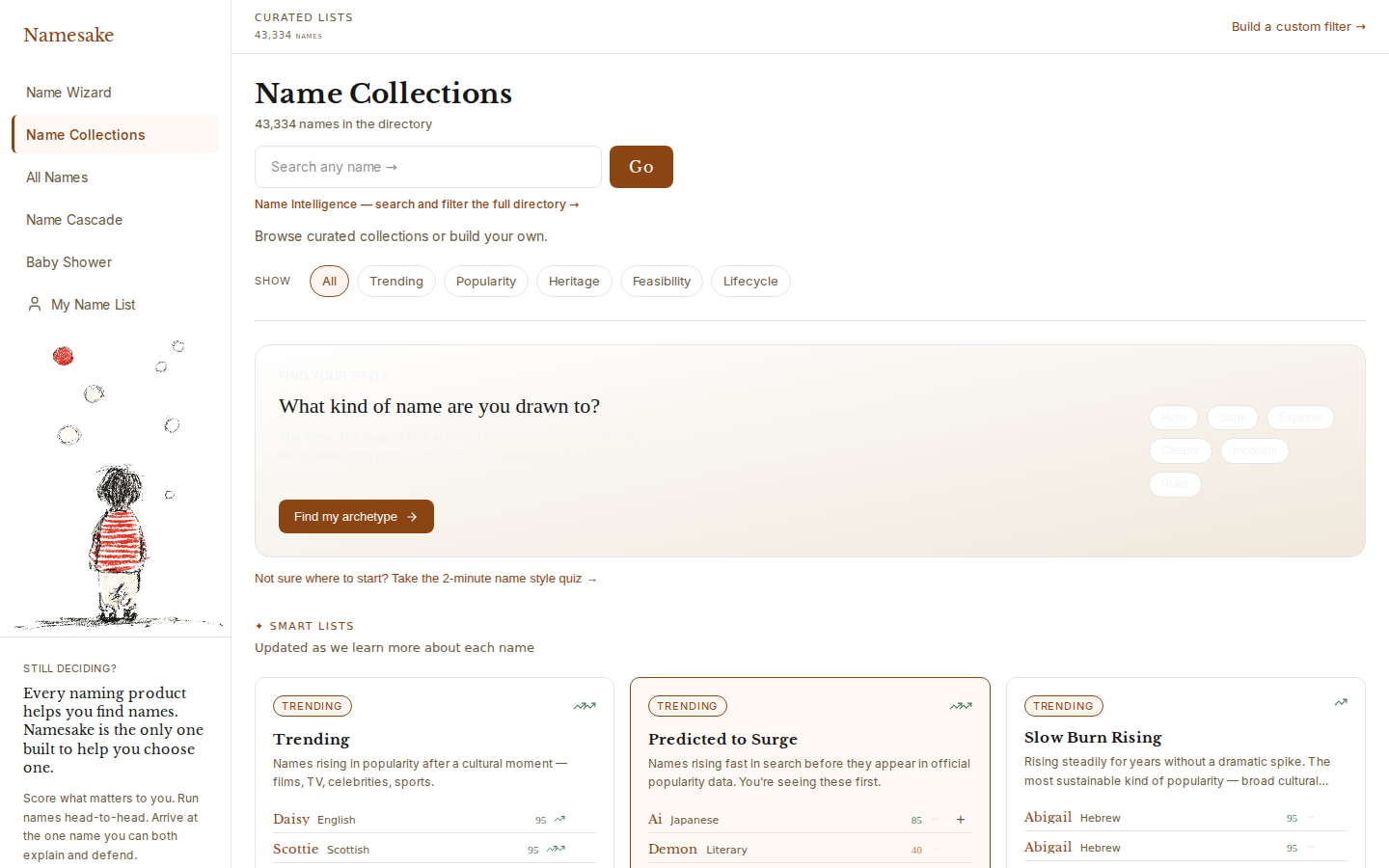
Namesake is a baby-naming tool I built for two expecting parents who need a way to choose together. My wife and I are expecting our first child. We went to Barnes & Noble, bought baby-name books, and worked through the lists. The books gave us plenty of names. They did not give us a sound way to compare our preferences or explain the final choice years later.
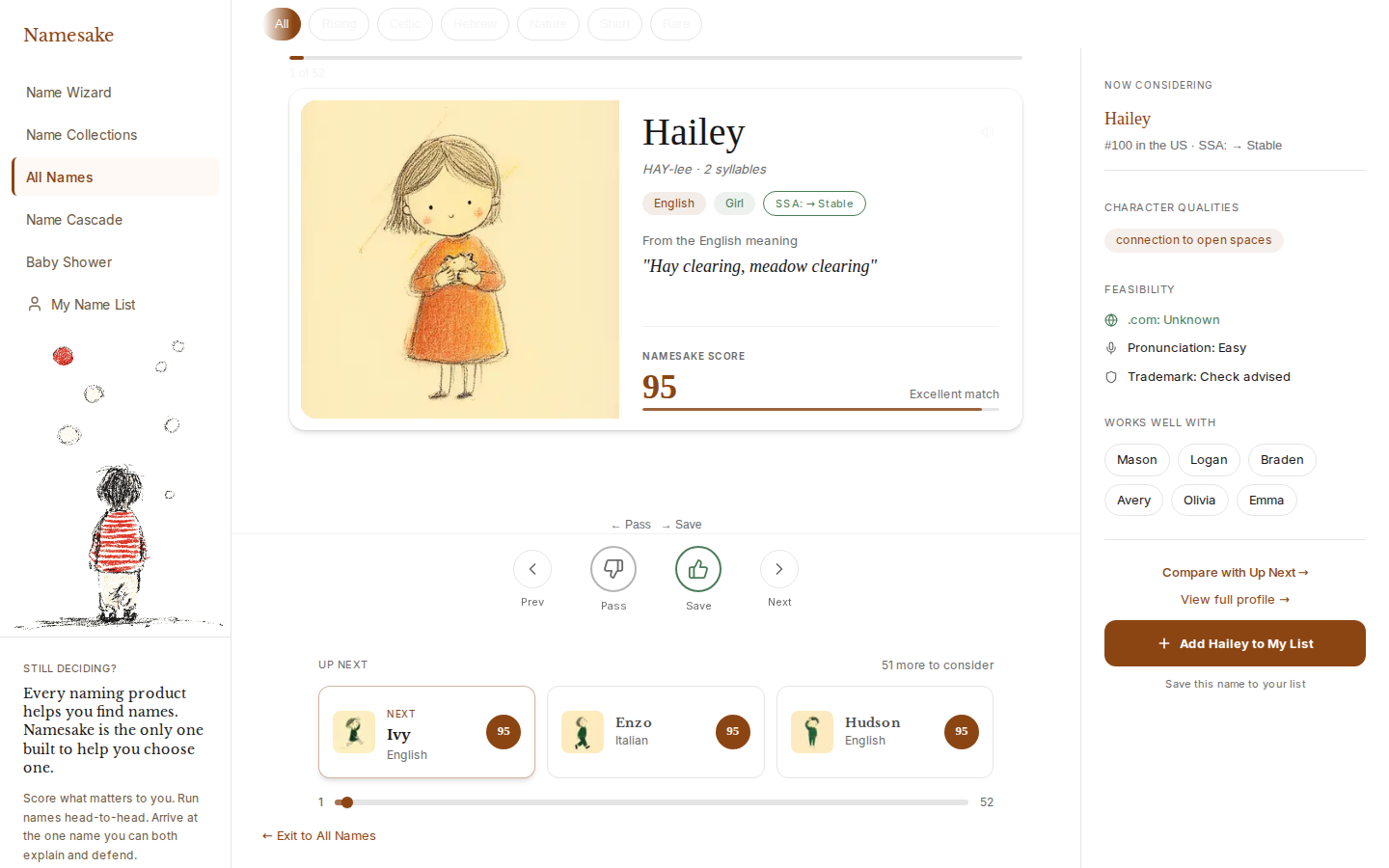
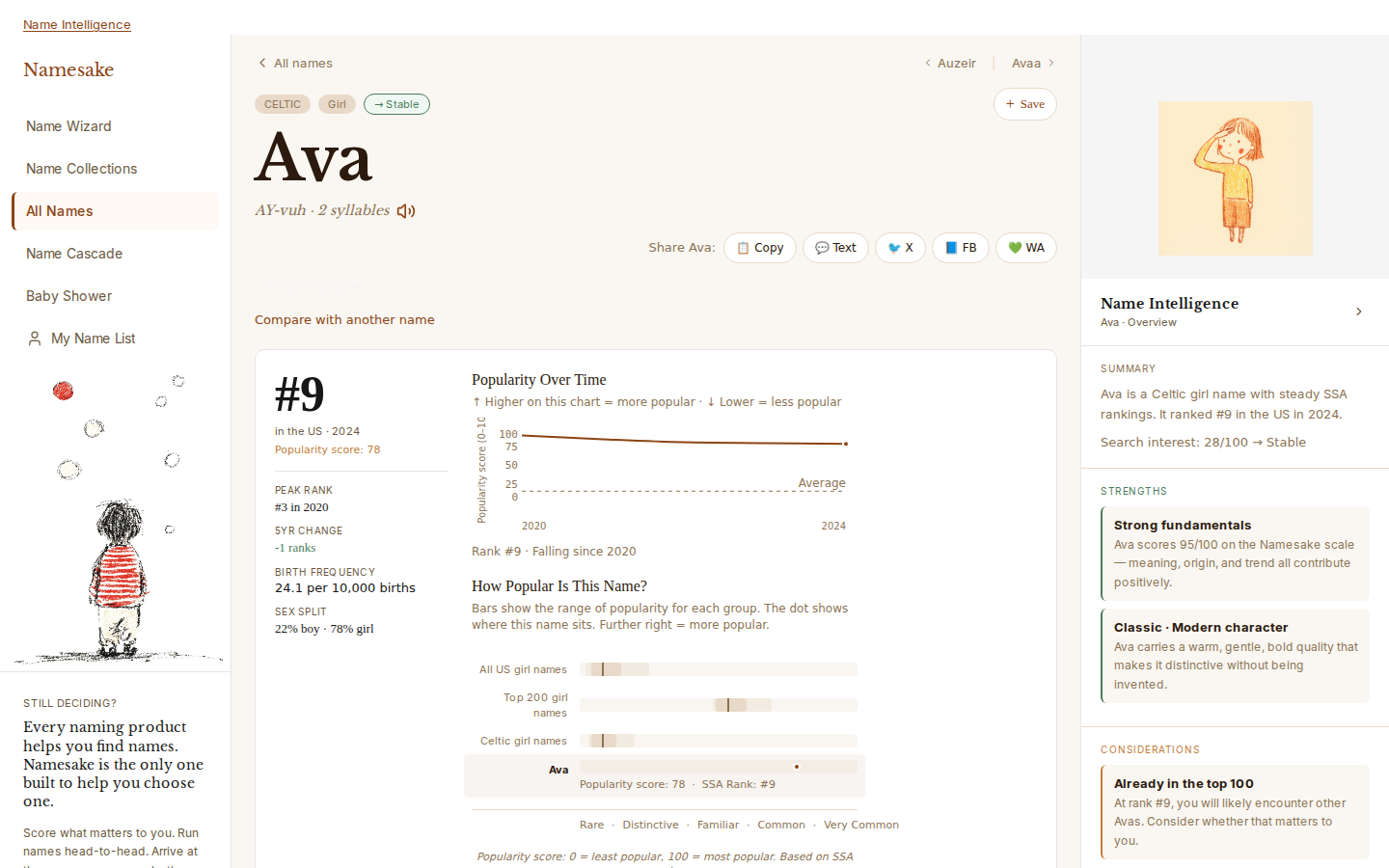
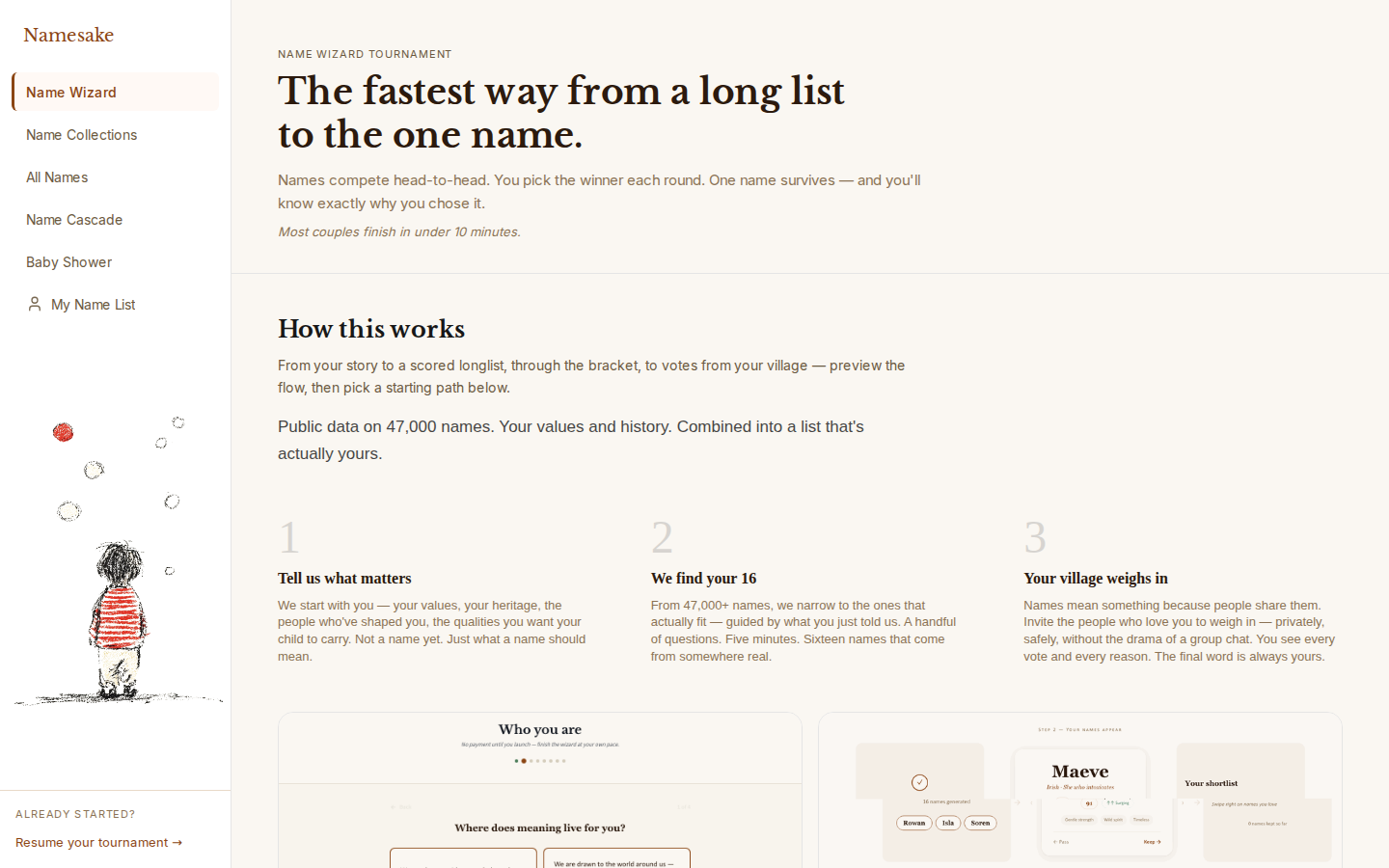
I designed Namesake around the decision itself. Each family can say what matters, build a longlist, and launch a tournament. Private parent brackets preserve each person's first reactions before the results are compared. The name pages add evidence about meaning, history, popularity, pronunciation, and cultural context, while family voting gives other people a defined role in the process.
I want Namesake to reach a stronger ending than a bracket winner alone: an explicit yes from each parent and a reason written in their own words. The name should come with a story both parents recognize when their child asks about it.
Who it is for
Namesake is for expecting parents who want the naming decision to reflect both of them. It suits couples with separate favorites, family histories to consider, or a shortlist that keeps growing without producing agreement. They want a name they can live with, explain, and feel proud to give their child.
The problem
Baby-name lists create candidates, but two parents still have to make one decision. One person may love Rowan while the other can only say that it feels wrong. The conversation becomes a cycle of proposal and veto, and family suggestions add more names to sort through. Popularity charts help with one part of the choice, but parents also need to consider meaning, history, pronunciation, cultural associations, practical concerns, and what matters to their family.
What I built
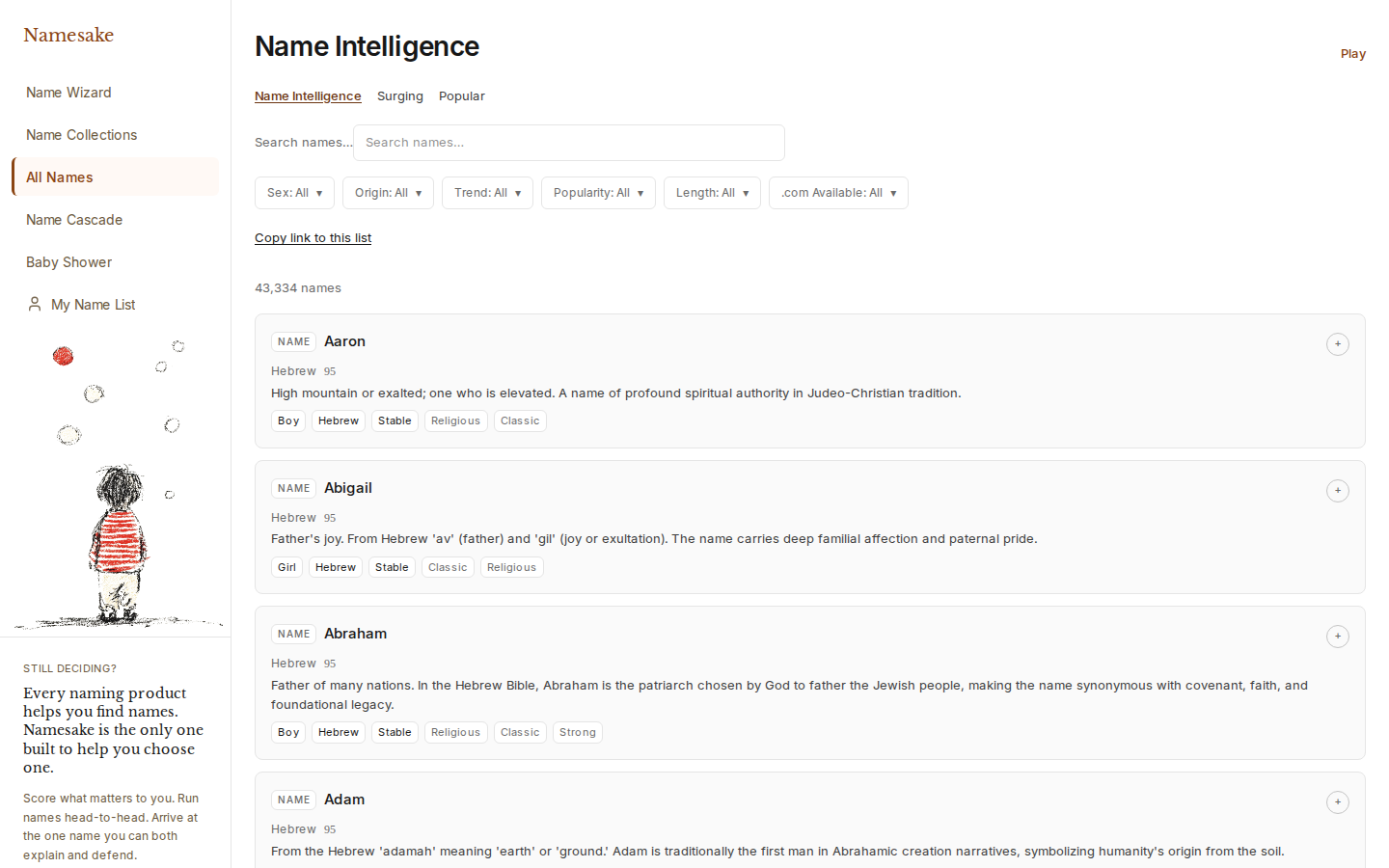
Namesake is a baby-naming tool that helps two expecting parents move from separate preferences to a shared choice. Parents build a longlist from their inspirations, rules, and family-defined weights, then launch a tournament. Each parent completes a private bracket before comparing the results. Family voting and a live baby-shower format can continue the tournament to a winner. Research comes from 43,334 name pages covering meaning, history, trend, and cultural signal, with popularity evidence drawn from Social Security records covering 1880–2024. A separate catalog score weighs uniqueness, trend, meaning, practicality, and search interest for browsing and comparison. That score is deterministic and reproducible, while the builder ranks names according to the priorities each family sets.
What is new in it
- Private parent brackets happen inside a launched tournament, followed by comparison. Each parent ranks without seeing the other's choices, so the conversation begins with recorded preferences instead of repeated proposal and veto.
- The builder uses weights and rules chosen by the family. That personal ranking is kept separate from the fixed catalog score used on name pages, so each score has a clear purpose.
- The research connects Social Security naming patterns with cultural context. One published study compares 1,141 cultural events with birth records from 1880–2024 to examine where culture and naming changes coincide.
- One tournament can support private parent brackets, family voting, and a live baby-shower format. The same shortlist can move from the couple's preferences to group voting and a resolved winner.
Where it stands
Namesake is built toward a clear ending: two parents explicitly agree on one name and record why it fits their family. Namesake is live today with private parent brackets, comparison, family voting, baby-shower mode, and 43,334 name pages, providing the research and decision process needed to reach that goal.