Inventory
What the portfolio can do
This is a catalog of tools and software for teams considering a build with me. The products in the work use these tools. They can also support a client build.
The People Analytics Toolbox catalog records 741 entries, including 483 declared capabilities, measured on . Selected capabilities are described below.
Describe jobs, skills and the people who do them
Every analysis about people starts with what their job is. Most companies keep that in a spreadsheet nobody trusts. These give each job a fixed address, so everything else can join to it.
A reference for every job
Job families, focus areas and levels, each with a permanent number that never moves, built from measured work rather than copied from a vendor's list.
Map your job titles to it
Takes a company's messy job records and matches each one to the reference, with a confidence level, and says so when it cannot tell.
The parts of a job
Twenty-two thousand responsibilities, tasks, skills and qualifications that can be searched and reused across job descriptions.
What good looks like in a job
Interview questions, rating scales, performance standards and goal templates for each job at each level.
Career paths
Where a person can go next from their job, what they would need to learn, and a way to check they learned it.
Links to the public standards
Crosswalks from the job reference to O*NET, SOC and the European ESCO lists.
The frames
A frame is a shared reference for one kind of thing — a job, a place, a skill — with a fixed address, so products join on it instead of each keeping their own list. JobFrame is the flagship.
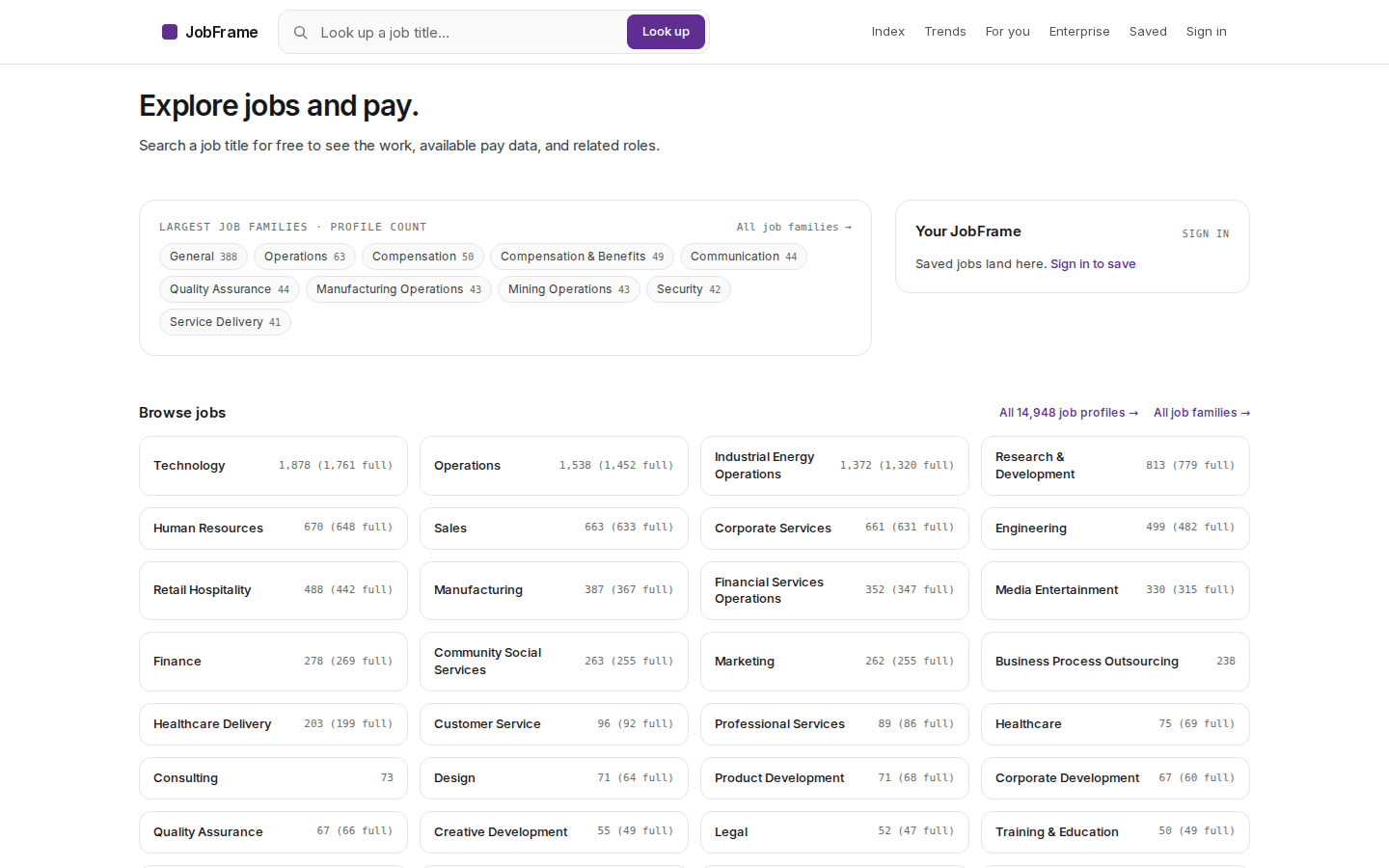
JobFrame
FlagshipA public reference for jobs: what the job is, its level, and what it pays.
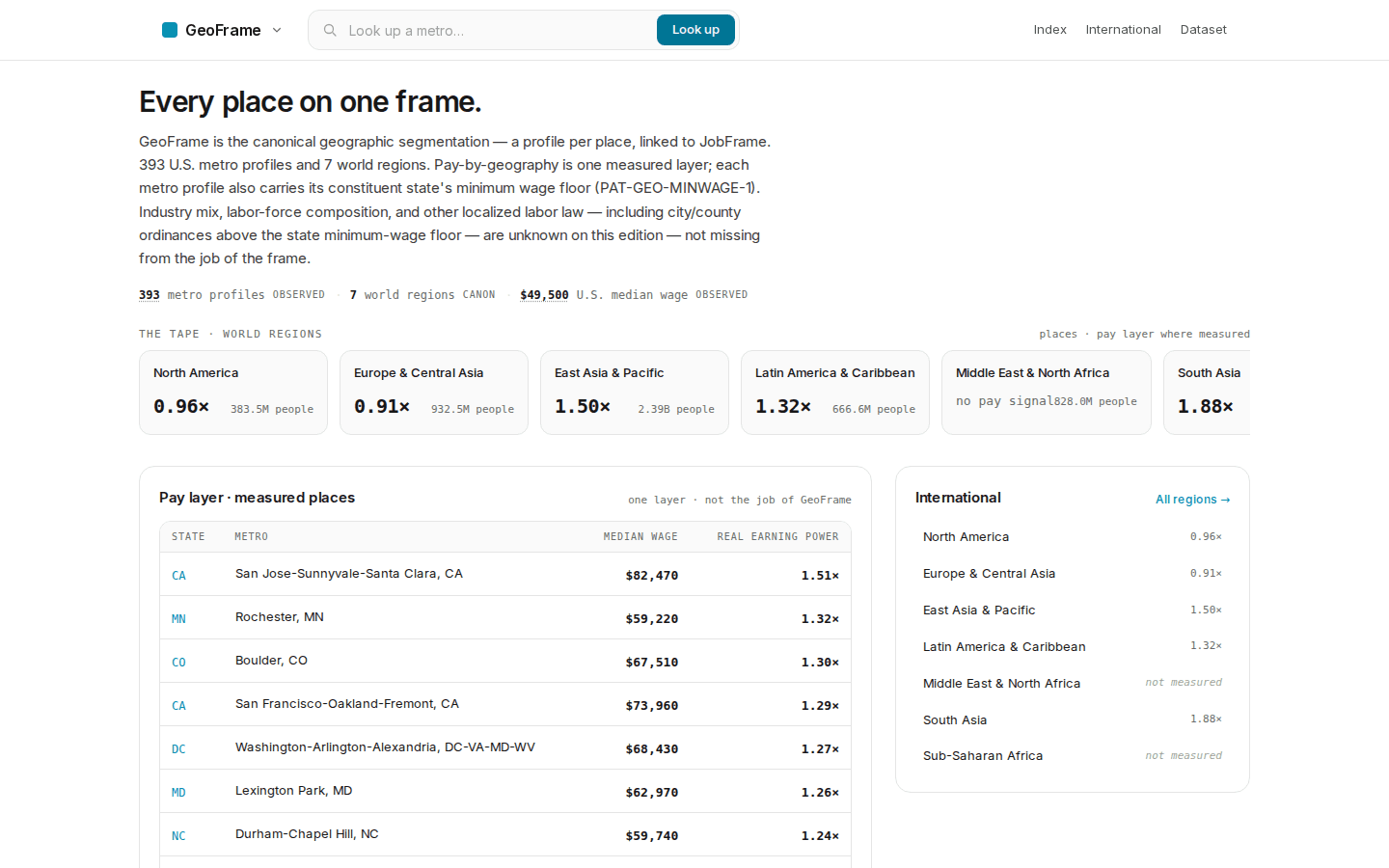
GeoFrame
A profile for every place — 393 U.S. metros and 7 world regions — with pay and cost of living side by side.
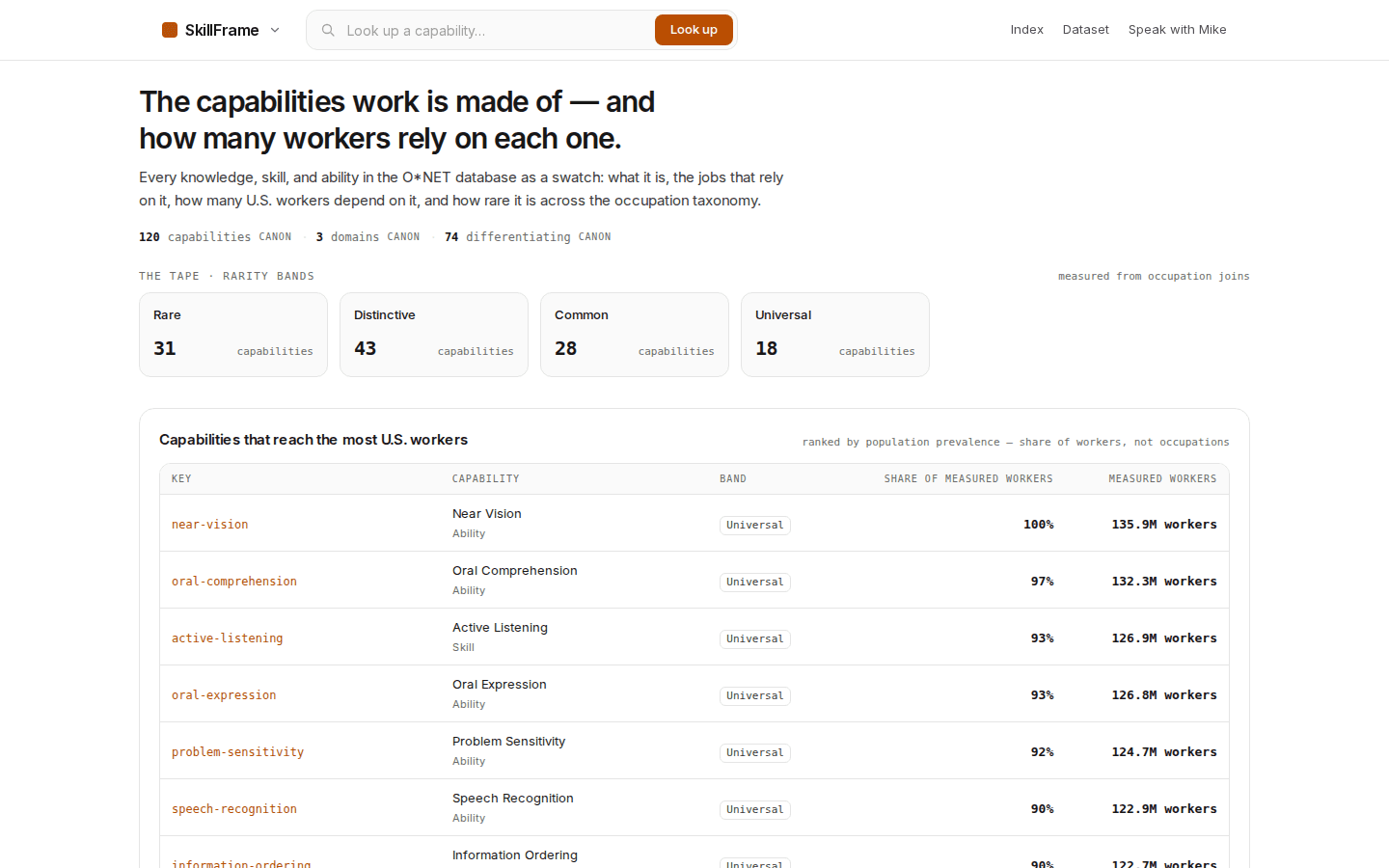
SkillFrame
A reference of skills: what each one is, which jobs use it, and how common it is.
PersonFrame
Under DevelopmentA reference of personas: who they are in the work, what they want, and what gets in the way.
IndustryFrame
Under DevelopmentA reference of industries and sectors.
SegmentFrame
Under DevelopmentA reference of workforce segments — the cuts analysis is done by.
ProblemFrame
Under DevelopmentA reference of organizational problems, drawn from the literature.
ConditionFrame
Under DevelopmentA reference of the conditions that block performance on a team.
StoryFrame
Under DevelopmentA reference of the stories an organization can tell with its people data.
Measure people, teams and managers
The measurement science that makes a survey or a rating worth acting on: the right questions, enough of them, from raters who have not seen each other's answers.
Adaptive surveys
Asks each person the question that tells you the most, given what they have already answered, and pools answers across studies so evidence adds up instead of starting over.
Survey programs over time
Annual surveys, pulses, new-hire and exit touchpoints, scheduled together so nobody is asked too often.
Turn a theory into a questionnaire
Starts from what you want to measure, finds a published instrument that already does it, and only writes new questions when none fits.
Manager and leader quality
A manager effectiveness index across nine areas and a leadership score built from it, each part traceable to the measures underneath.
Interview and review panels that stay independent
Scores interviews and performance reviews so no rater sees another's score before submitting their own.
Hiring methods that predict
Recommends a mix of selection methods ranked by how well the research says they predict performance, and audits an existing interview kit against the same evidence.
Who works with whom
Summarizes a collaboration network into a few numbers a leader can read: reach, silos, and who everything depends on.
Set and check pay
Compensation from the market price of a job to the structure a company pays on, and the checks that keep it fair and legal.
Market pay for a job
A pay model that combines several salary sources into one estimate, with how far off it is likely to be.
A pay structure for your company
Grades and ranges designed from your strategy, size and industry, from a guided questionnaire for small companies up to a custom design.
Pay fairness
Finds pay gaps between groups, explains how much is structural, and keeps a case file you could hand to counsel.
A pay audit from a spreadsheet
Upload a roster, get every row checked and a full audit run on it.
Minimum-wage compliance
Wage floors by jurisdiction and date, kept current, checked against an offer before it goes out.
Compensation decisions
From a company's priorities to several pay scenarios, simulated side by side, never a single answer.
Forecast, plan and decide
The statistics a decision needs, with the uncertainty left in so nobody mistakes a guess for a fact.
Forecasts and what more information is worth
Simulations of the range of outcomes, and the value of learning more before you commit.
Workforce planning
Headcount, open requisitions and finance budgets reconciled position by position, with a 30, 60 and 90 day forecast.
Predictions that show their evidence
Estimates about people returned with the evidence behind them and how sure they are.
Which drivers matter
Separates the importance of drivers that move together, so the loudest one does not take credit for the rest.
What people are worth to the business
The value of an employee over their tenure, and where helping people do their best work pays back most.
Did the program work?
Experiments registered before the results are in, with the sample size worked out and the effect measured afterwards.
Are the leader's forecasts any good?
Leaders make predictions, the results come in, and each leader gets a score for how well their forecasts matched.
Check whether AI can be trusted with a judgment
An AI that scores or rates is a rater, and a century of measurement already knows how to tell a reliable rater from a noisy one.
Judgment with its error attached
Several models make the same call independently, their agreement is measured, and when they disagree the system holds back instead of guessing.
No AI in the answer you are served
Answers are computed, not generated on the fly; a check fails the build if that ever stops being true.
Labels that can be re-checked
Every claim a page makes about itself carries a receipt that a machine can recompute.
Keep people data private and joined up
The plumbing under all of the above.
Privacy by default
Finds and masks personal information, and refuses to report on any group too small to keep people anonymous.
One record per person
Merges records about the same person from the HR system, the applicant tracker and the learning system.
The org chart, over time
Who reported to whom and when, so a team's numbers roll up correctly.
Use it where you already work
Every tool can be used by a person in a browser and called by an AI agent. Some also come as add-ons for the spreadsheet you already have open.
Spreadsheet packs
Installable Google Sheets and Excel packs, and Excel files that round-trip without losing where the numbers came from.
Ask your own data
A plain-language question answered from your data, ranked, with every answer tied to its source.
A paid data API
Keys, metered calls and posted prices, for developers and agents.
Toolboxes for one kind of work
A toolbox is a set of these tools gathered for one kind of work. A person can use them, an agent can call them, or both together.
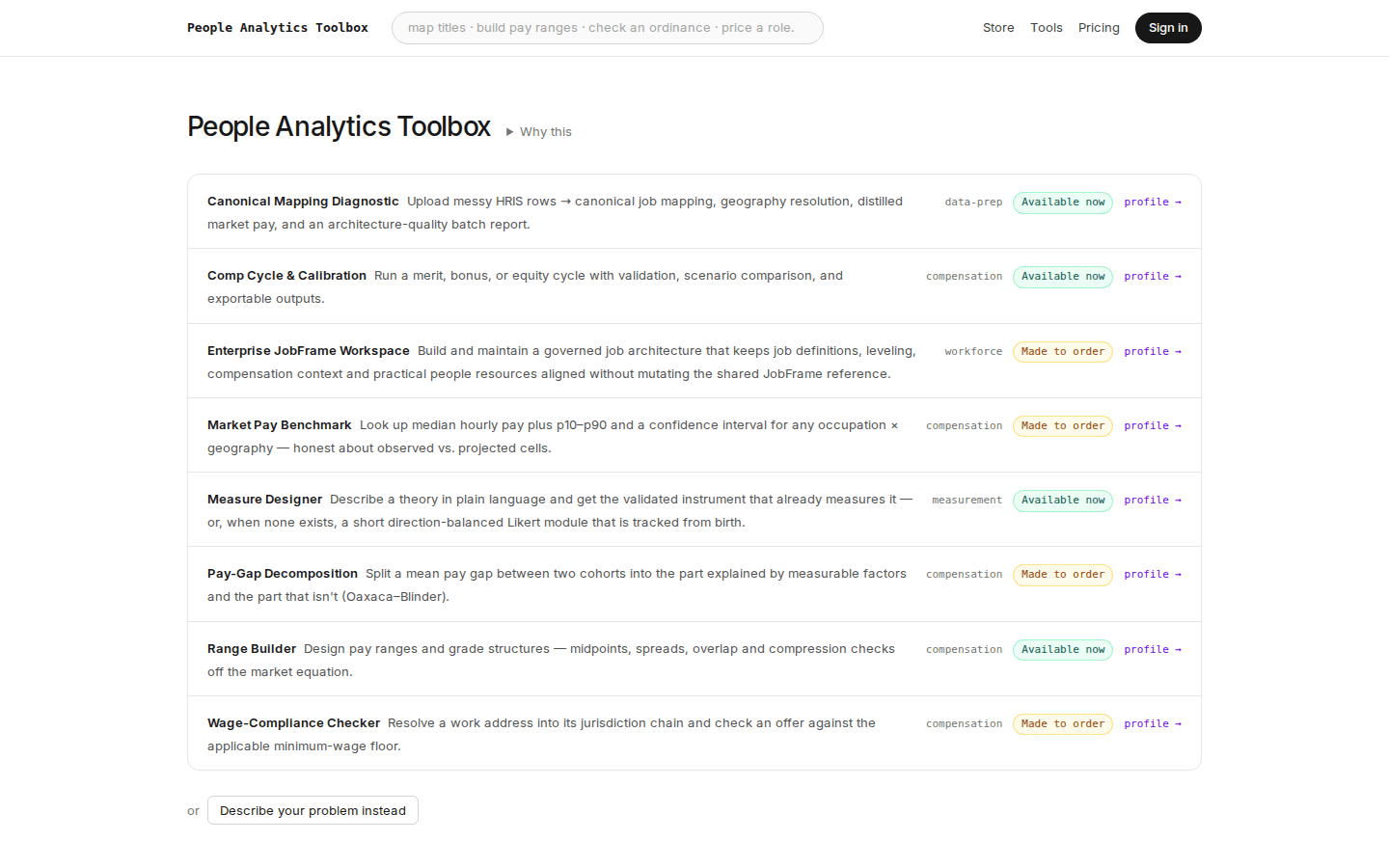
People Analytics Toolbox
A live people-analytics platform: psychometrics, HR data, compensation, and performance — tools a person can run and an agent can call.
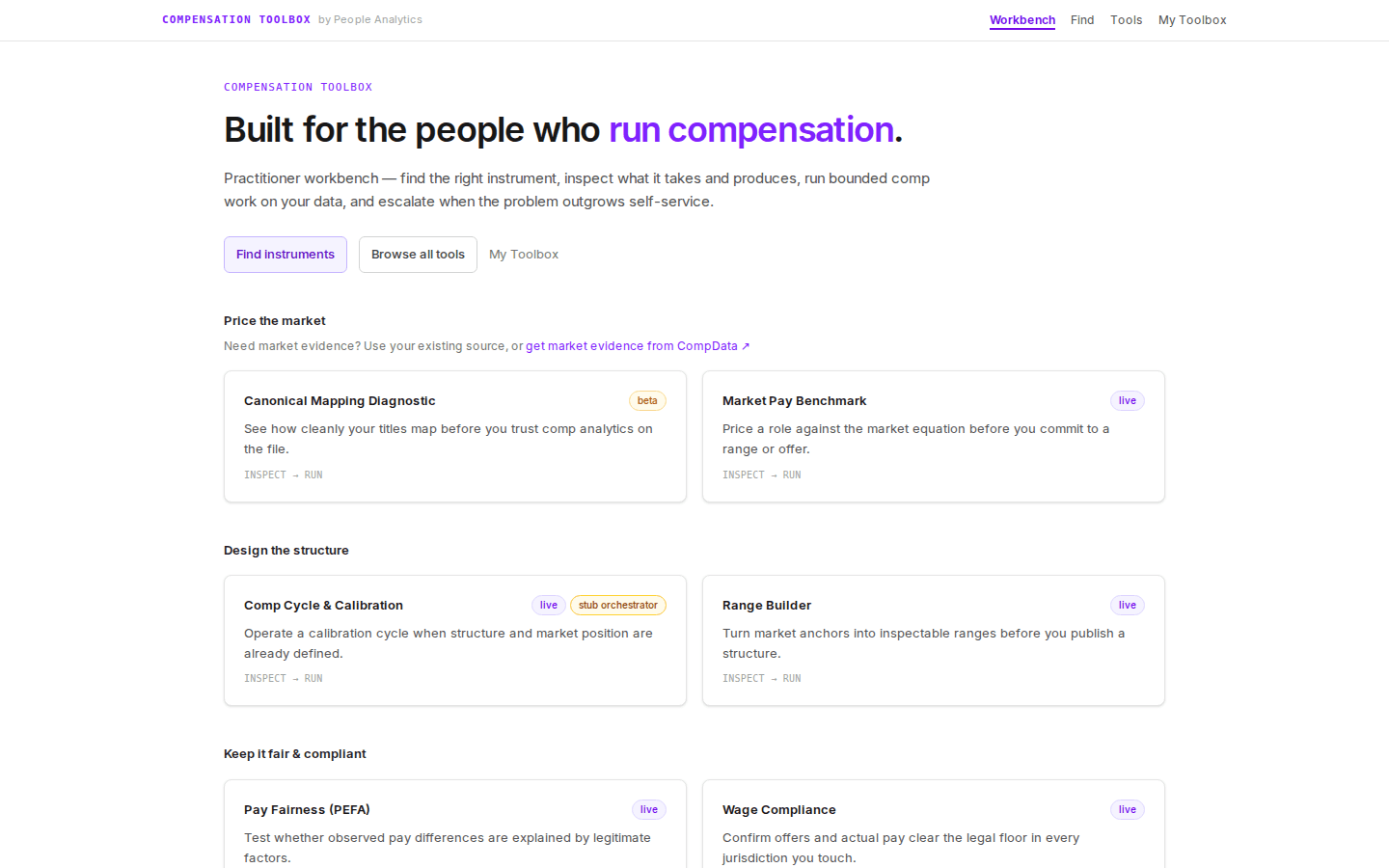
Compensation Toolbox
Tools to price jobs, set pay ranges, check equity, and run a compensation cycle.
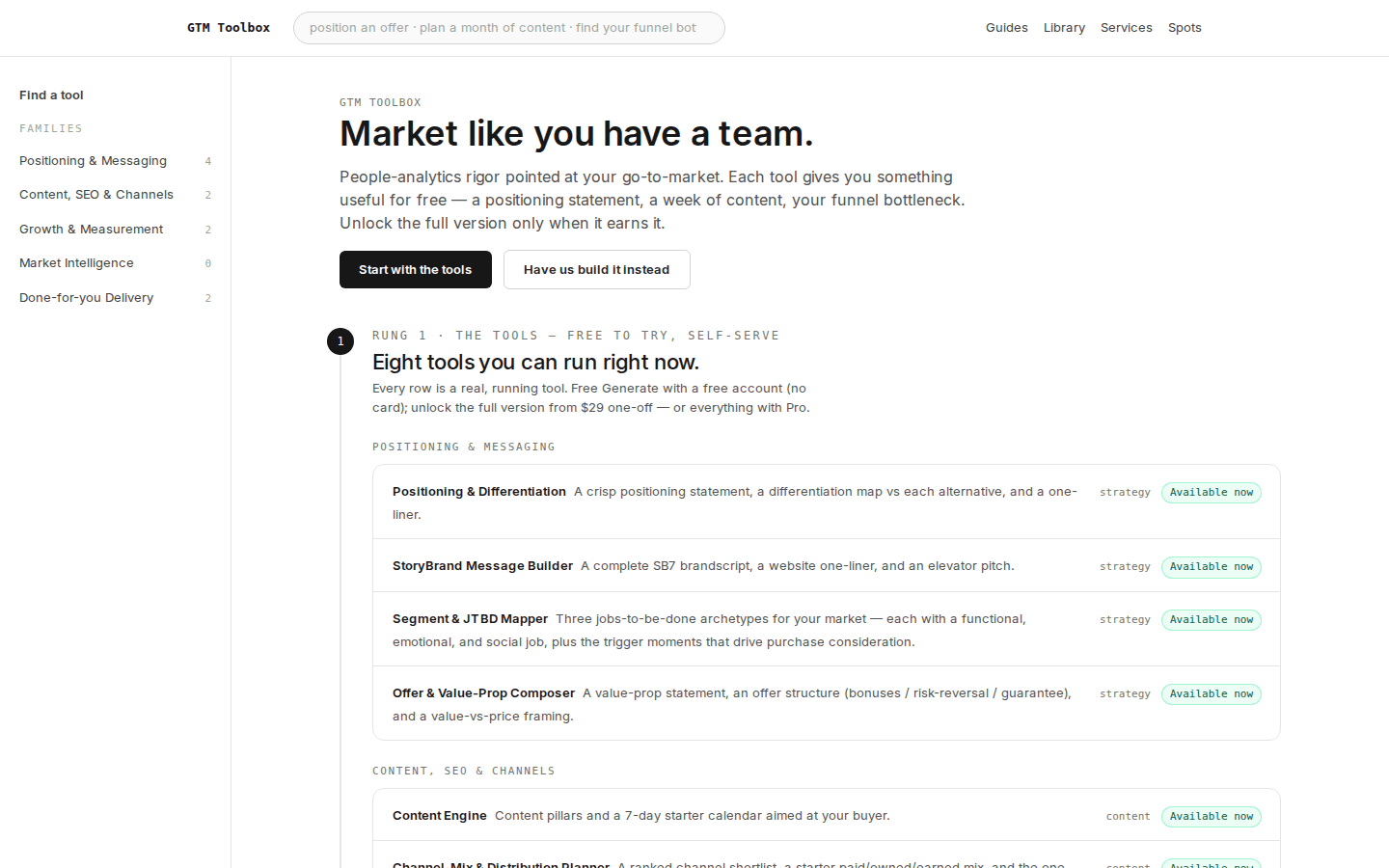
Coach Toolbox
Under DevelopmentTools for independent coaches working with their own clients.
Consulting Toolbox
Under DevelopmentTools for independent consultants working with client companies.
HR Toolbox
Under DevelopmentTools for people who work in HR.
Guide websites
The PeopleAnalyst guide list has 34 customer-facing websites with at least one guide assigned, measured on October 6, 2026.
- Baby Namebabyname.guide
- Bicycle Guidebicycle.guide
- Care Leader Guidecareleader.guide
- Church Leader Guidechurchleader.guide
- Clinical Leader Guideclinicalleader.guide
- Coaching Leader Guidecoachingleader.guide
- Construction Leader Guideconstructionleader.guide
- Engineering Leader Guideengineeringleader.guide
- Facilities Leader Guidefacilitiesleader.guide
- Farm Leader Guidefarmleader.guide
- Fleet Leader Guidefleetleader.guide
- Game Designergamedesigner.guide
- Government Leader Guidegovernmentleader.guide
- Independenceindependence.guide
- Law Firm Leader Guidelawfirmleader.guide
- Local Leader Guidelocalleader.guide
- Maintenance Leader Guidemaintenanceleader.guide
- Manufacturing Leader Guidemanufacturingleader.guide
- Marketing Leader Guidemarketingleader.guide
- Military Leader Guidemilitaryleader.guide
- Nonprofit Leader Guidenonprofitleader.guide
- Nurse Leader Guidenurseleader.guide
- Office Leader Guideofficeleader.guide
- People Leader Guidepeopleleader.guide
- Poker Playerpokerplayer.guide
- Practice Leader Guidepracticeleader.guide
- Restaurant Leader Guiderestaurantleader.guide
- Restaurant Owner Guiderestaurantowner.guide
- Sales Leader Guidesalesleader.guide
- School Leader Guideschoolleader.guide
- Science Leader Guidescienceleader.guide
- Sports Coach Guidesportscoach.guide
- Startup Leader Guidestartupleader.guide
- The Talkthetalk.guide
What it is built with
Runtime
- Next.js 16
- React 19
- TypeScript
- Python 3.13
Data
- Postgres + pgvector
- Supabase
- BigQuery
- Drizzle
AI
- Anthropic (Opus / Sonnet / Haiku)
- OpenAI
- Modal (GPU + LoRA)
- FLUX / SDXL
Infrastructure
- Vercel
- Modal
- GitHub Actions
- Stripe
- Playwright
Capability counts are from the People Analytics Toolbox’s own manifest, as of . Website counts come from the PeopleAnalyst guide list, measured on .