I built JobFrame because workforce decisions break down when people use the same title for different work, or different titles for the same work. A person trying to understand a role needs a clear account of the work, level and pay. An HR or compensation team needs that account to hold up across many jobs and local titles.
I wanted the public lookup and the organization-wide architecture to begin with the same job definition. That led to one stable address for each job, a consistent level structure, related-role links and modeled pay with a directional label. It also meant mapping O*NET and SOC by edition, so those standards can change without renumbering JobFrame.
The aim is practical: make a job easier to understand, level and price, then give a whole organization a job architecture it can explain and maintain.
Who it is for
JobFrame is for anyone who wants to understand what a job involves, where it sits in a career and what it pays. HR and compensation teams use the same public reference to explain levels, compare related roles and price jobs. The enterprise offer builds job architecture for a whole organization.
The problem
Senior, manager and lead can mean different things from one organization to another. The same work can carry several titles, while the same title can hide different scope and responsibility. People struggle to tell where a role sits or whether its pay fits the work. HR and compensation teams are left reconciling local titles, levels and pay in spreadsheets, then explaining decisions from references that do not line up.
What I built
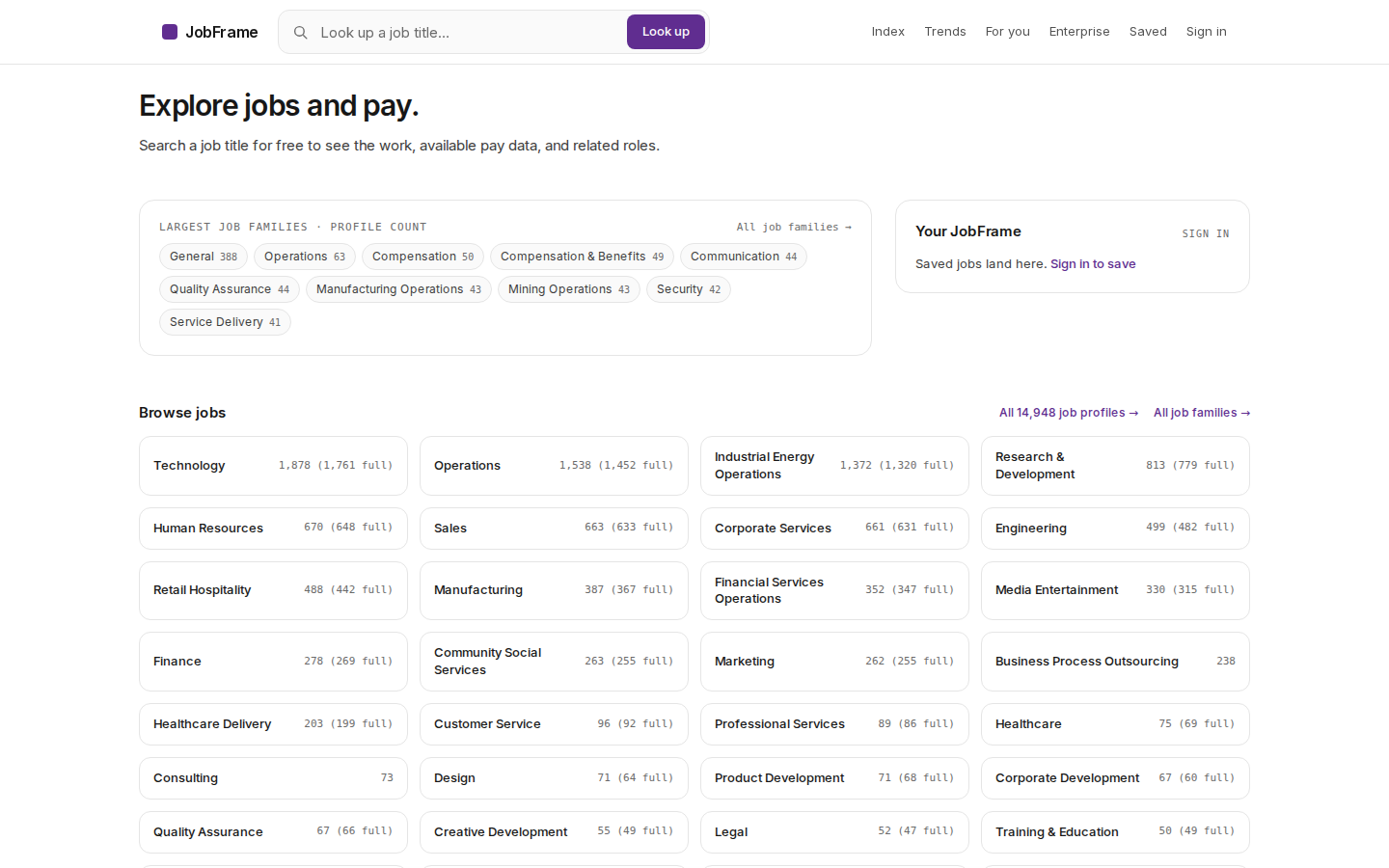
JobFrame gives every job one stable address and a public profile describing the work, its level, related roles and modeled pay. The level structure spans 25 levels in professional, support, management and executive tracks, and modeled pay outlooks are labeled directional. Anyone can search a job title for free. O*NET and SOC map to JobFrame addresses by edition, preserving the JobFrame address when those standards change. HR and compensation teams use the reference to level and price jobs. The enterprise offer builds job architecture for a whole organization using the same reference.
What is new in it
- Each job has one stable address. O*NET and SOC map to it by edition, so changes to those standards do not renumber JobFrame jobs.
- The level structure places work across 25 levels in professional, support, management and executive tracks. Readers can see the track as well as the level on one profile.
- A public profile joins the job definition, level, related roles and modeled pay in one place. Individuals and compensation teams can work from the same published reference.
- The public job architecture is licensed CC BY 4.0, allowing people and organizations to inspect, share and build from the published reference with attribution.
Where it stands
The aim is to give every job decision one clear reference, so people can understand a role and organizations can explain how they level and price it. Free title search and public profiles with work, level, related roles and modeled pay are live today. Recruiting and calibration remain in build.