I built Principia as a practical reference for people who have to defend how they measured engagement, psychological safety, leadership and other workplace constructs. Measurement is where this work earns or loses credibility. The field has decades of useful research, but its definitions, instruments and findings are spread across papers, handbook chapters and supplementary material. A team can end up using a familiar label without being able to show what its questions measure or why the supporting evidence deserves confidence.
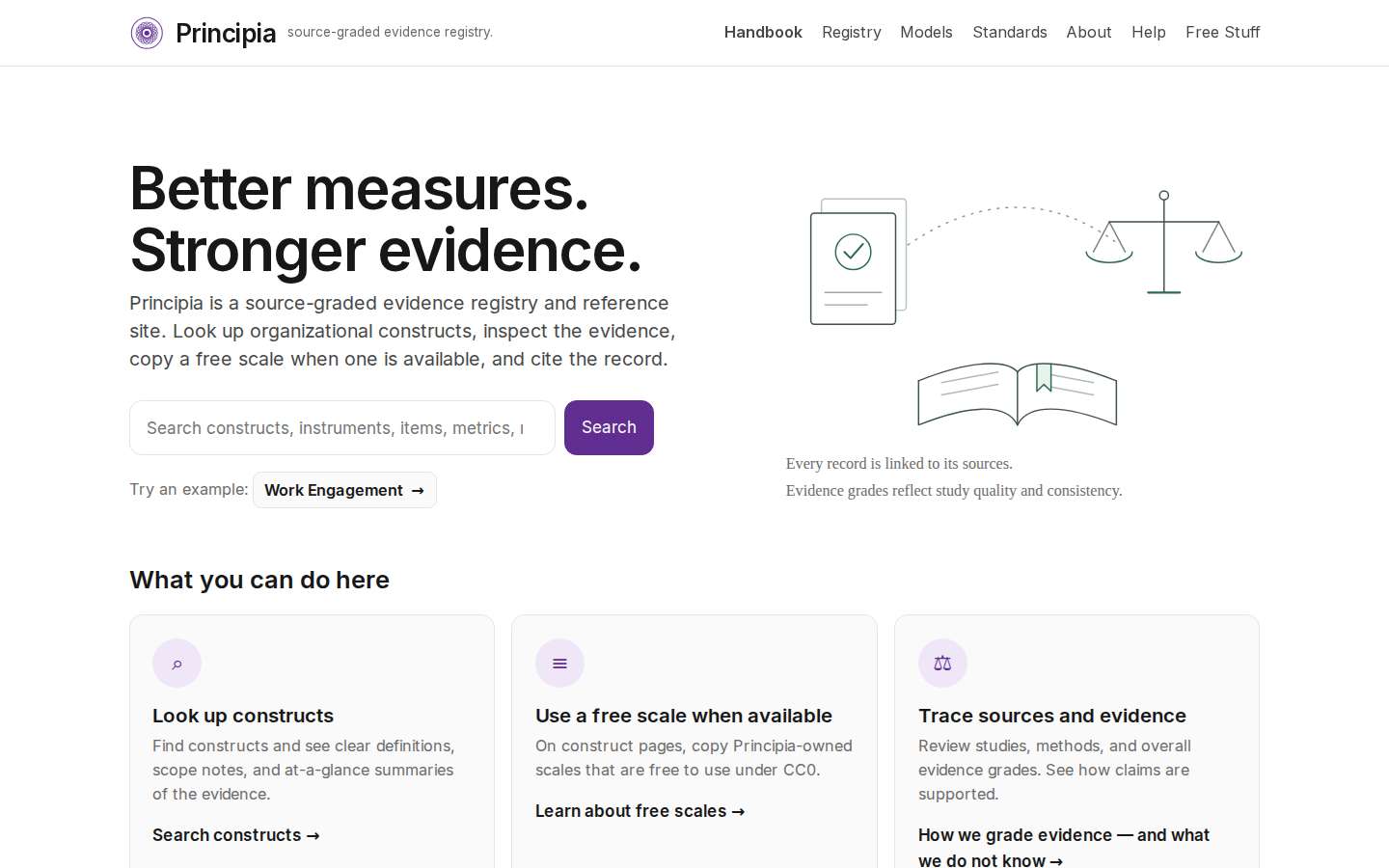
Principia brings that material into a usable reference. It organizes constructs and instruments around graded sources, and it releases Principia-owned scales under CC0 when they are available. Published entries pass curator review, while the source trail remains attached for people and software using the evidence.
I want Principia to become the dependable evidence foundation for workplace measurement. The practical test is simple: a practitioner should be able to walk into a meeting and state what was measured, how it was measured and which evidence supports the choice.
Who it is for
People analytics practitioners, researchers and survey designers use Principia to define a construct, choose an instrument and show the evidence behind it. It is especially useful when a measurement choice will be reviewed or challenged and the practitioner must explain what was measured, how it was measured and why the choice is suitable.
The problem
Workplace measures often arrive as a familiar label and an unexamined score. Engagement, psychological safety or leadership can mean one thing in a research paper, another in a vendor survey and another inside a dashboard. When someone asks why those items were chosen, whether the instrument can be used or what evidence supports the claim, the answer is scattered across papers, handbooks and rights notes. Practitioners are left defending measures they may not fully trust, and weak choices carry into analysis, reporting and decisions.
What I built
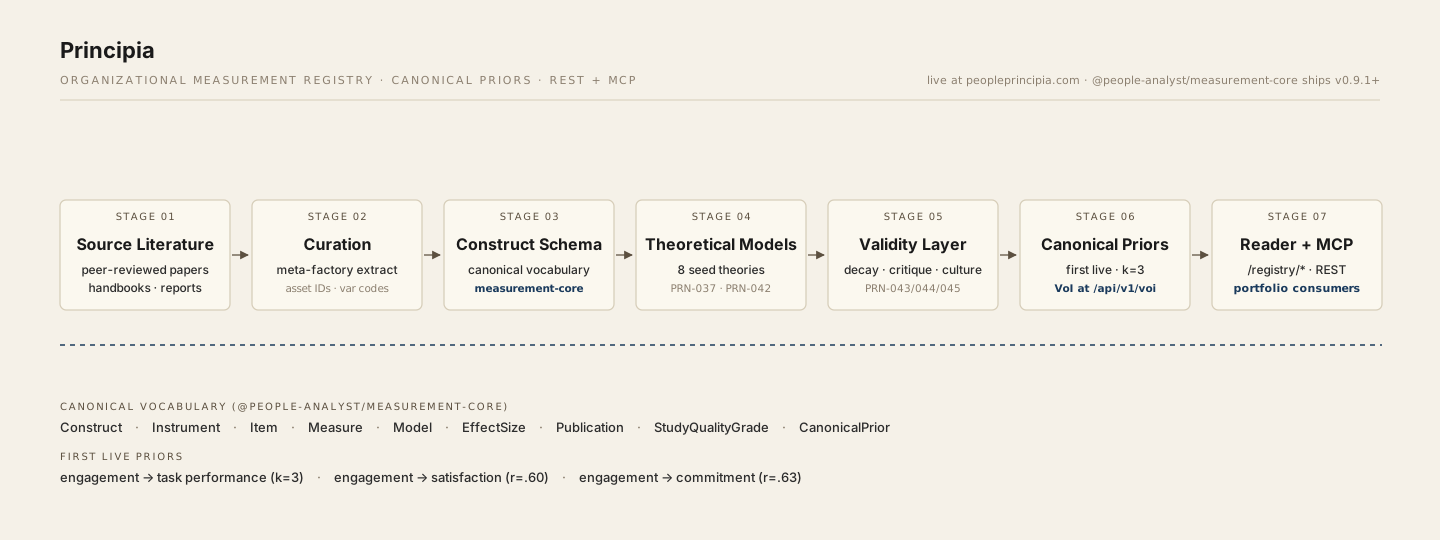
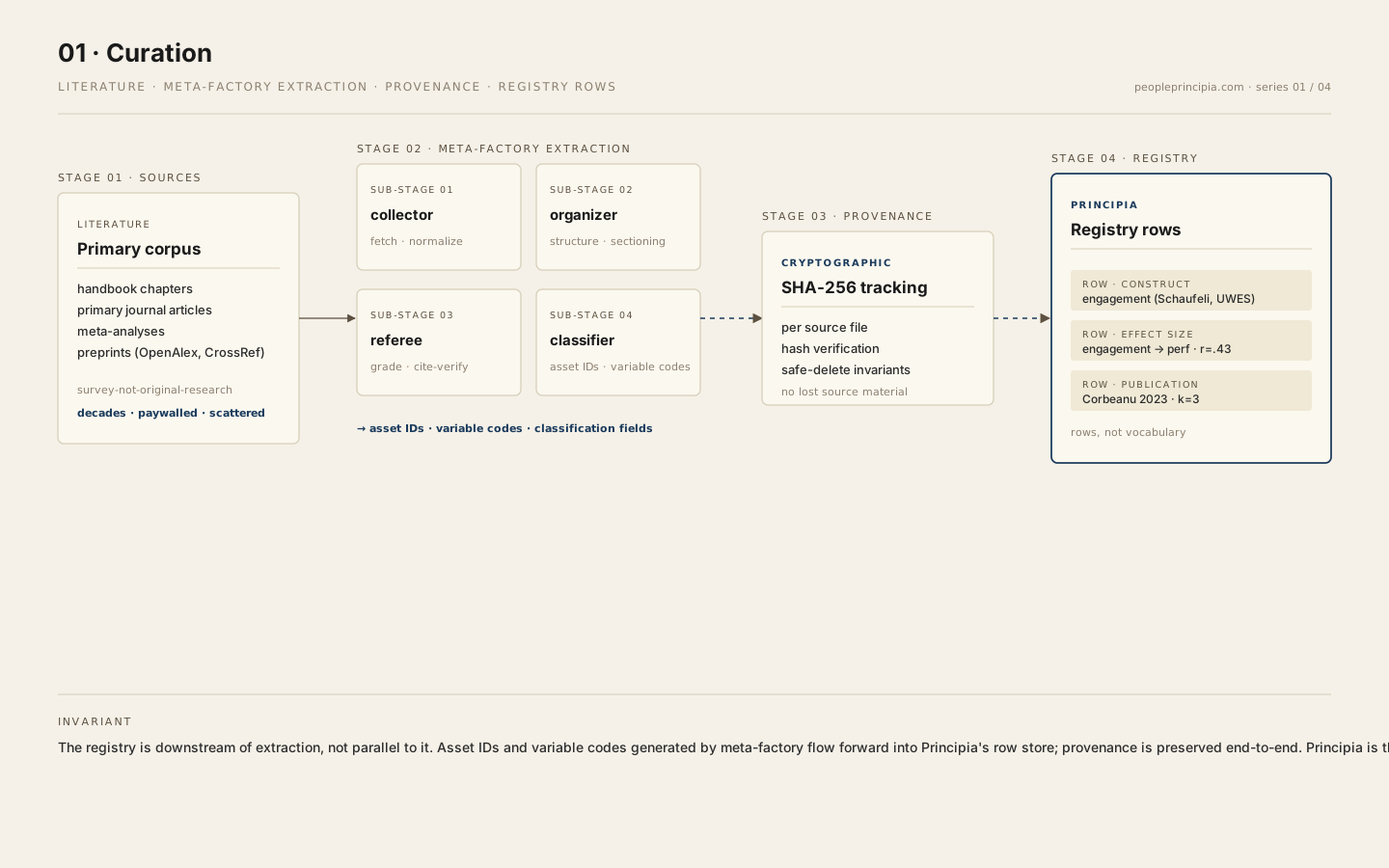
Principia is a source-graded organizational measurement reference for professionals who measure things at work. It is built so a measure can carry its definition, research support and usage status from survey design into analysis and reporting. Principia organizes definitions, scope notes, evidence grades and related instruments by construct. When a Principia-owned scale exists, it is available under CC0. Every published entry is graded by its sources and passes curator review. Source files retain SHA-256 fingerprints, and a daily Merkle anchor makes the provenance record tamper-evident. The public site and read-only APIs use the same structured evidence for constructs, prior estimates and instruments.
What is new in it
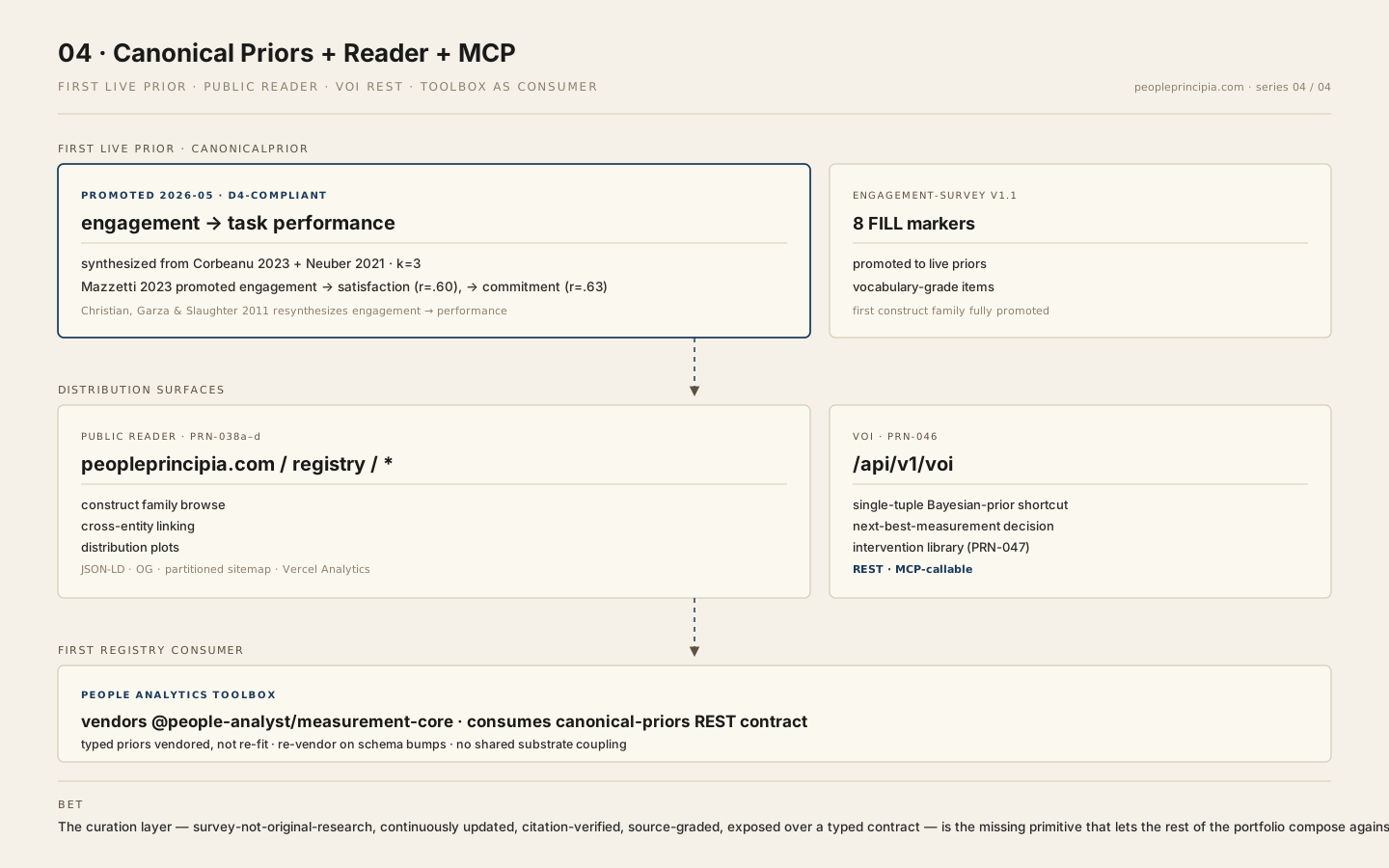
- Each effect and instrument keeps its study-quality grade, so readers and connected tools can distinguish stronger evidence from thinner support instead of treating every citation as equivalent.
- Principia distinguishes its own CC0 scales, public-domain instruments and instruments it can describe and cite without reproducing their wording. Practitioners can see what may be copied before designing a survey.
- Source files carry SHA-256 fingerprints, while a daily Merkle anchor makes the provenance record tamper-evident. Later changes can be detected instead of silently replacing the record.
- The public pages and read-only APIs draw from the same structured evidence, allowing software to use constructs, prior estimates and instruments without creating a separate measurement reference that can drift.
Where it stands
The aim is for every workplace measure used in a survey, analysis or dashboard to carry a clear definition, a source trail and a plain account of instrument rights. Principia is live at peopleprincipia.com and, as of September 2, 2026, held 526 constructs, 879 instruments and 1,074 measured effects.