Get2Great is management and HR writing with turnover benchmarking for managers and HR leaders. I built it because broad averages are easy to quote and easy to misuse. A turnover rate can appear ordinary in one comparison and troubling in another, and the useful question is always the same: compared with whom?
Turnover was the practical place to start. Leaders care about it, public JOLTS data provides a reference, and the usual averages flatten organizations that do very different work. I wanted the tailored score and the public reference to stay separate because they answer different questions.
The writing belongs here because the number answers only part of the job. A manager still has to decide what the result means and what to do next. I am building Get2Great toward one place where a leader can check the comparison, explain it plainly, and move into the management decision with the evidence still in view.
Who it is for
Get2Great is for managers and HR leaders who need to know whether a turnover rate is actually unusual. It serves people preparing a review, deciding whether to investigate, or looking for practical help with hiring and management. They need a comparison that fits their organization and evidence they can explain to colleagues.
The problem
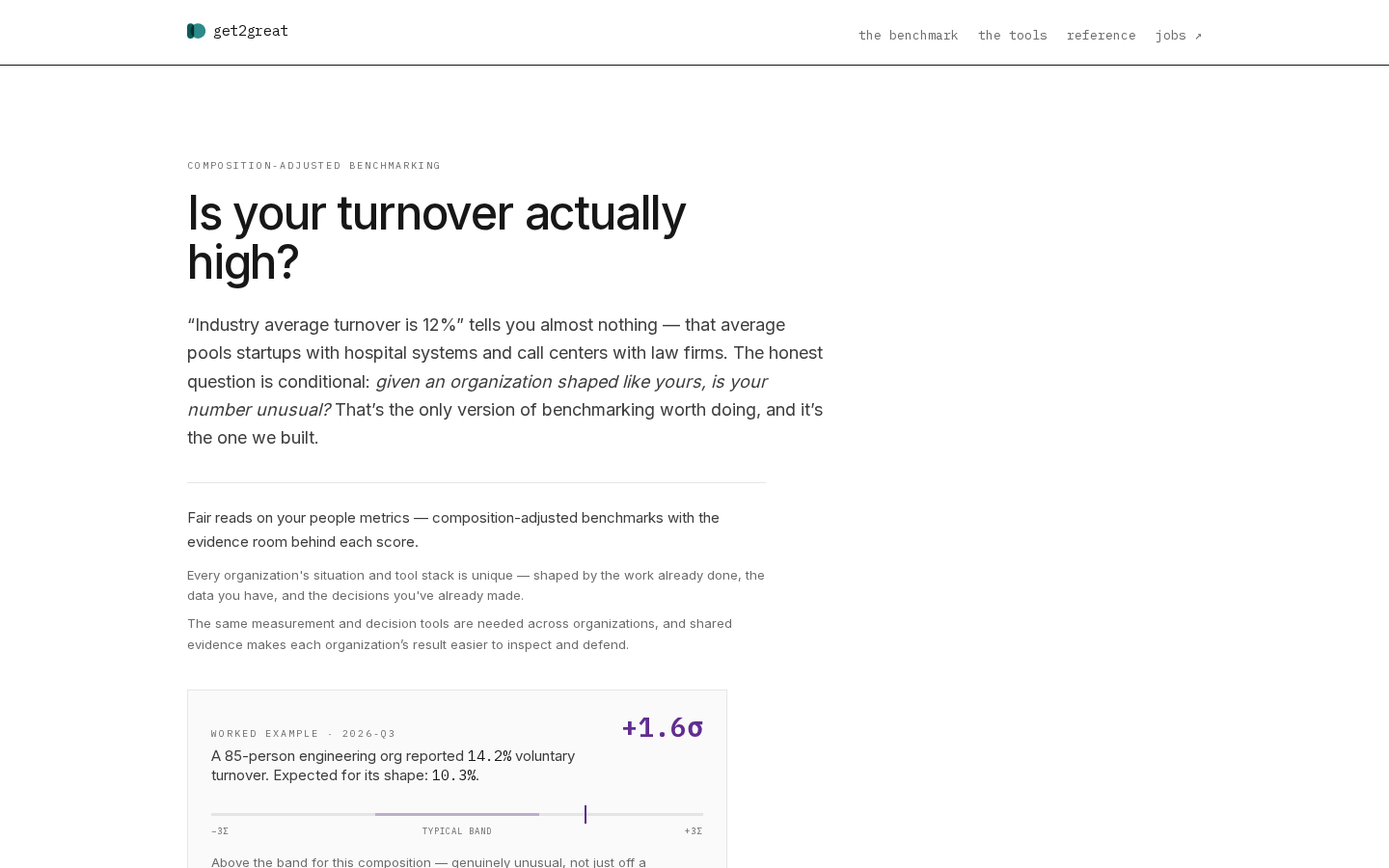
A turnover rate by itself does not tell a leader whether the organization has a problem. A broad turnover average may place a startup beside a hospital system, or a call center beside a law firm, even though their workforces differ. That can make an ordinary result look alarming or hide a result that deserves attention. The leader is left arguing from a comparison that does not fit. They need to know compared with whom, what produced the answer, and whether the number calls for action.
What I built
Get2Great combines management and HR writing with turnover benchmarking for managers and HR leaders. The benchmark starts with voluntary turnover and compares the figure with organizations that have a similar makeup. The live pilot uses a fixed reference set; public JOLTS quit rates appear beside the score and do not produce it. Every result names the scoring model, keeping the tailored score and government reference distinct. Reference pages cover all 28 JOLTS industries and company size. The site also publishes practical management and HR writing for readers who begin with a hiring or management question rather than a methods question.
What is new in it
- The benchmark treats organizational makeup as part of the comparison. It judges turnover against similar organizations, avoiding a broad average that combines workplaces with different sizes, work, and staffing patterns.
- The tailored score and government reference remain separate. Public JOLTS quit rates sit beside every score, and the result names the model that produced its answer.
- The writing starts with the manager's job question rather than the statistical method. Readers get practical help with hiring and management while the benchmark keeps its evidence visible.
Where it stands
Get2Great is being built so a manager can check turnover, answer “compared with whom?”, and decide whether to defend the result or investigate it. It begins with turnover benchmarking, reference pages for all 28 JOLTS industries and company size, management and HR writing, and a one-metric diagnostic at $2,500.