I built Bicycle Guide because a summary of one book is rarely enough to learn a practical subject. It can repeat an author’s argument, yet it cannot tell you whether other serious books agree, which claims carry the weight, or how the ideas fit together. I wanted the synthesis to help without asking the reader to take it on faith.
That meant keeping the books visible. Each claim should lead back to its source, and disagreements should remain in the guide instead of being edited into a false consensus. The guide should leave a reader with a practical route through the subject and a clear way to keep learning.
The larger aim is simple: someone should be able to arrive with a book title or a problem, understand the field’s serious answer, inspect the evidence, and choose a useful next step. The published guides and book profiles show the foundation is in place. The work now is to make that answer easier to reach across the catalog.
Who it is for
It is for managers and professionals arriving with a recommended book or a problem their experience does not cover. It also serves readers working across family, money, relationships, writing, research, and craft. They want the main ideas, serious disagreements, practical direction, and sources they can check without reading the whole shelf first.
The problem
People often arrive with a book someone recommended or a problem they need to solve. A single-book summary gives them one author’s account. A generic answer may hide which source supports each claim. Neither shows clearly what the field agrees on, where respected books conflict, or which advice fits the situation. That leaves the reader choosing between a quick answer they cannot inspect and a long reading list that delays the useful next step.
What I built
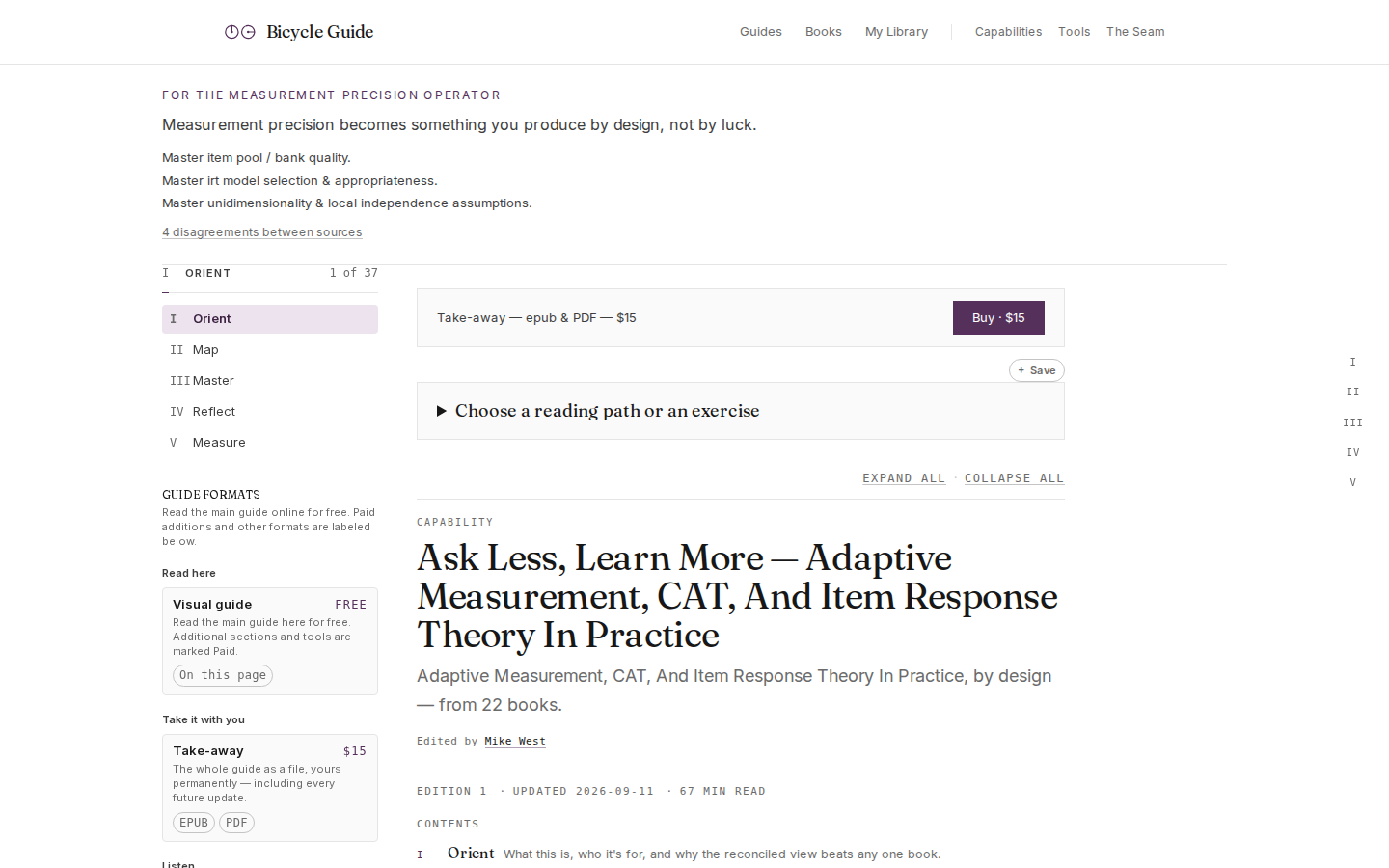
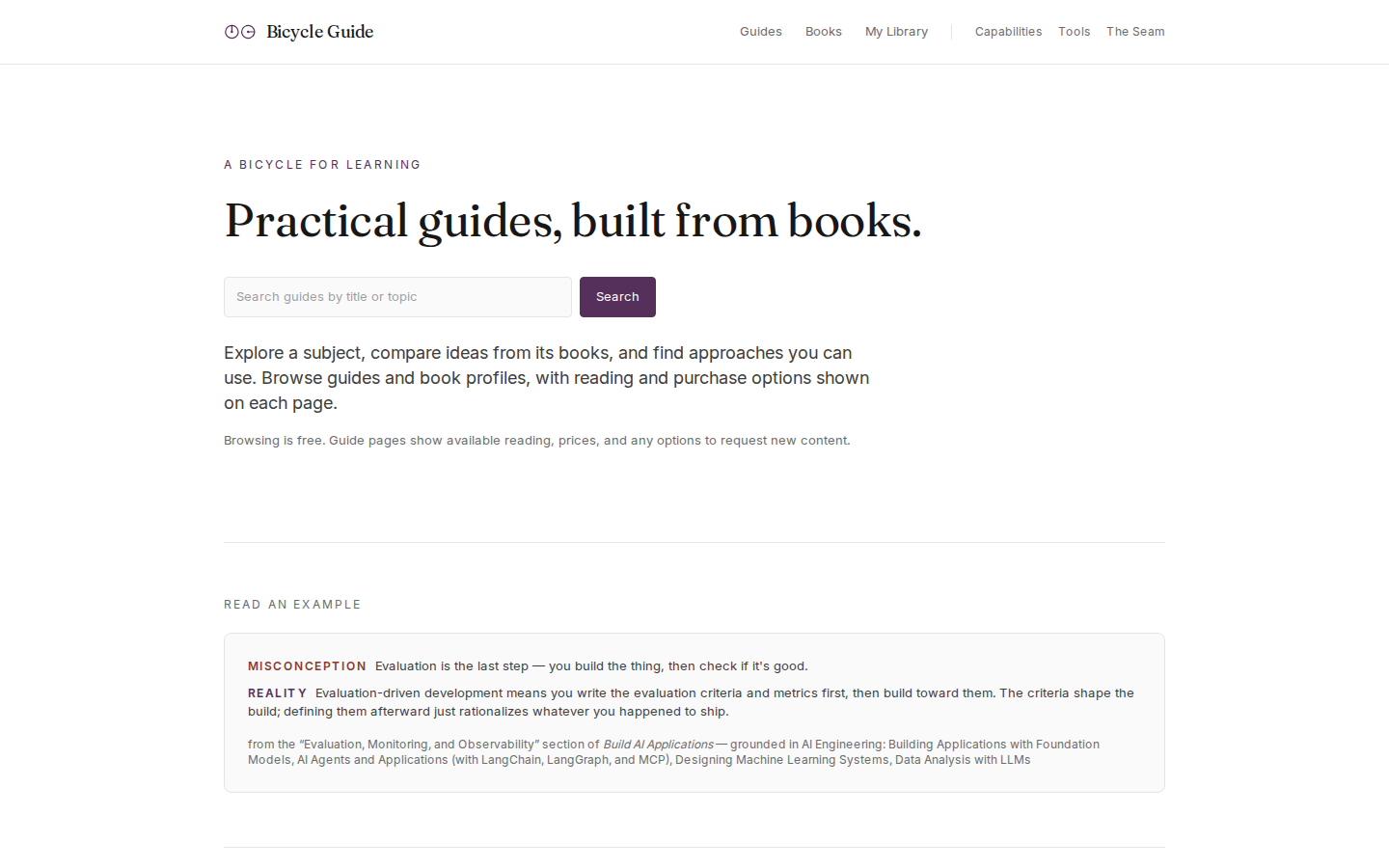
Bicycle Guide publishes practical guides built from the best books in a field. Each guide compares those books, then presents the ideas that matter, a route from foundations to advanced practice, common misconceptions, practical steps, and points of disagreement. Every claim links to the book it came from, so readers can inspect the evidence and continue into that book’s profile. This makes the synthesis checkable one statement at a time, rather than only at bibliography level. Most guides include slides and a self-diagnostic. Reading is free, while a take-away guide is priced by depth and sold at the same price wherever it appears.
What is new in it
- Every claim links directly to the book behind it. Readers can check the evidence one statement at a time and follow the source into its own profile.
- Guides treat disagreement as part of the answer. They show where serious books split, preserving contested ideas that ordinary summaries often compress into a single account.
- Readers can begin with a named book and move outward to the wider subject, or start with the subject and trace any important claim back to a book.
Where it stands
The aim is for Bicycle Guide to become the first place people use to learn what a book or a field’s best books say, where they disagree, and what to do next. It is live with 244 guides, 211 of them published, and 276 book profiles. Reading is free; take-away guides cost $5 to $49 depending on depth, at the same price wherever they are sold.